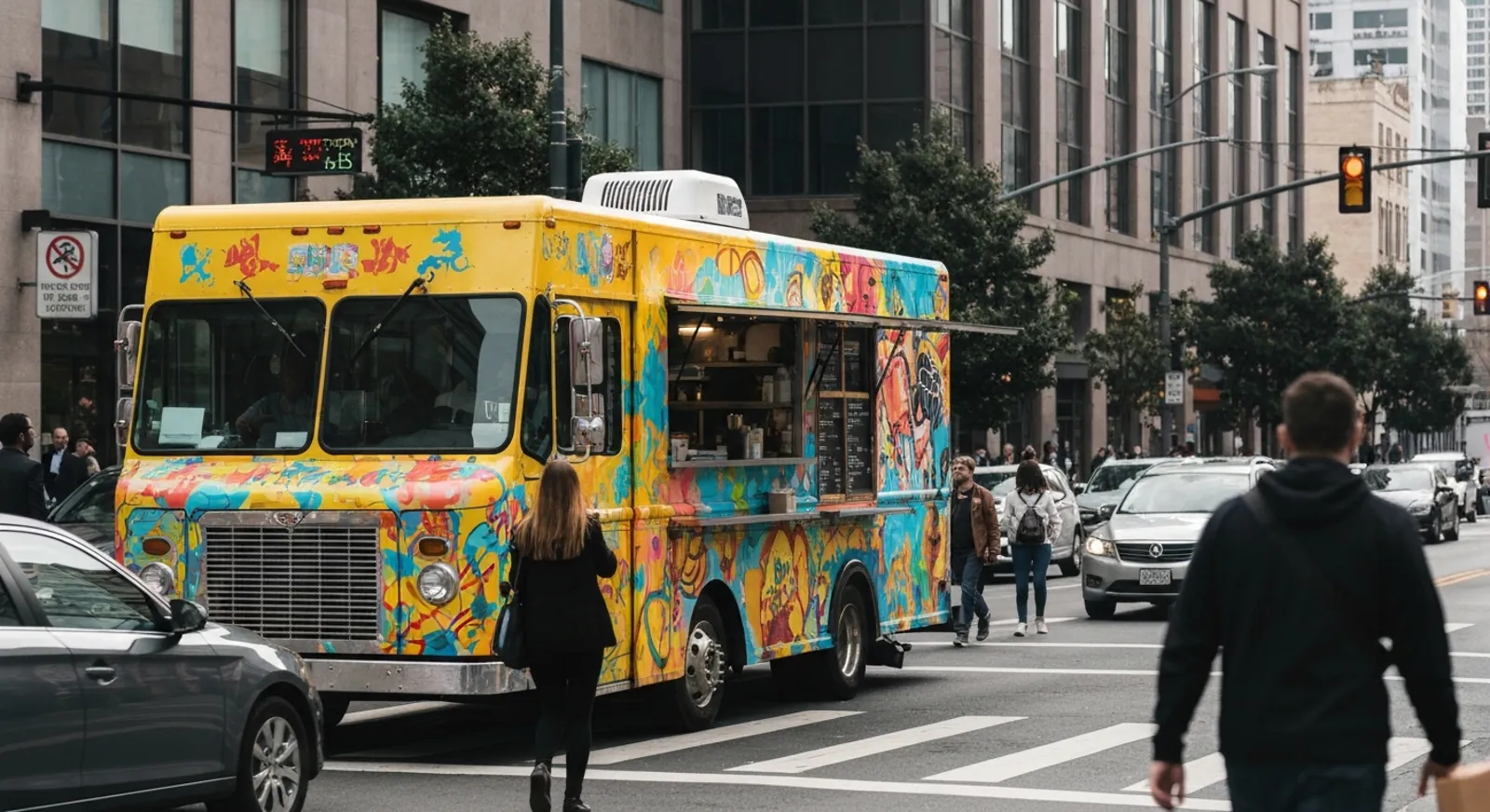
Short Answer
Chicago has 600+ food trucks operating under some of the strictest regulations in the US. The 200-foot rule makes street vending difficult — most trucks focus on office parks, private lots, and events. Permits run $1,500–$3,000/year. Finance nationally — 1–3 day approval, from 7.5% APR. B2B corporate catering is the most reliable Chicago revenue channel.
Food Truck Financing in Chicago, IL (2026)
Key Facts — Chicago
- → Estimated active food trucks: ~600
- → Annual permit cost: $1,500–$3,000
- → Monthly commissary: $700–$1,400
- → The 200-foot restaurant rule restricts street vending — corporate and event focus is essential.
- → Winter (November–March) is a real business challenge — plan indoor revenue channels before launch.
Chicago Food Truck Market Reality
Chicago is a harder food truck market than it looks on paper. The city has 2.7M residents, a huge downtown office market, and a strong food culture — but the regulatory environment is genuinely restrictive. The 200-foot restaurant rule is the defining constraint: in a city where restaurants are on every block, it eliminates most sidewalk street locations. Unlike Austin or Nashville, you cannot simply park on a busy commercial street and open for lunch.
The operators who succeed in Chicago treat it like a B2B business first, consumer business second. They build recurring corporate catering contracts, nail down private lot agreements in business parks and construction zones, and use the festival calendar (May–September) as their peak revenue season. The 200-foot rule becomes irrelevant when you're parked at an office campus in the West Loop or a construction site in the South Loop.
Chicago Food Truck Permit Requirements
| Permit / Requirement | Cost | Notes |
|---|---|---|
| Mobile Food Preparer license (BACP) | $1,500–$3,000/yr | Based on truck size; 6–10 week process |
| Chicago business license | $100–$400/yr | City-level requirement |
| Commissary agreement | $700–$1,400/mo | Required; Chicago has licensed commissaries on North and West sides |
| Food handler certification | $15–$50/person | Illinois Food Service Sanitation Manager Certification |
| Fire department inspection | $200–$500 | Chicago Fire Dept inspects cooking equipment |
Best Locations for Food Trucks in Chicago
- Fulton Market / West Loop (private lots, weekdays) — Chicago's tech and creative office hub. Google, McDonald's HQ, Motorola Solutions, dozens of agencies. Corporate catering $1,500–$4,000/day.
- The Loop (private property agreements) — Highest office density. The 200-foot rule is most restrictive here, but private lot agreements near train stations and park adjacencies work.
- Merchandise Mart / River North — Design industry, financial services. Strong B2B lunch market.
- Lakeview / Lincoln Park (residential) — Denser neighborhood residential market. Weekend farmers markets, private lot agreements near parks.
- Construction sites (citywide) — Major infrastructure and building projects throughout the metro. Construction crew catering pays $12–$18/meal for consistent morning and lunch service.
Revenue Seasonality: The Chicago Hustle
Chicago's food truck year is compressed into roughly 7 months of viable outdoor operating conditions (May through October, with April and November as shoulder seasons). This creates an intense peak period followed by a genuine business challenge.
Summer (May–September) is when the outdoor festival circuit activates. Lollapalooza (July, Grant Park) is the crown jewel — 400,000 attendees over 4 days. The surrounding South Loop and Grant Park perimeter see massive spillover even for trucks without official vendor status. Taste of Chicago (July) is another major event. The summer festival calendar alone justifies the high cost of the Chicago licensing process for operators who can navigate it.
October through April is when Chicago separates viable businesses from struggling ones. Outdoor foot traffic collapses in November, and by January Chicago winters make outdoor vending nearly impossible for days at a time. The operators who survive — and many don't — have built revenue infrastructure that doesn't depend on weather:
- Recurring corporate catering contracts locked in before October (tech campuses, law firms, consulting companies)
- McCormick Place convention catering (major conventions run year-round; food trucks with convention center relationships get recurring winter business)
- Private holiday events (December is actually a high-revenue catering month despite the cold)
- Indoor food hall or market appearances (Time Out Market, Revival Food Hall)
Plan your winter revenue strategy before you launch, not after the first cold November.
Best Food Truck Concepts for Chicago
Chicago has a sophisticated food scene with strong neighborhood identities. The Polish, Mexican, and Southern food traditions are deeply established. The opportunity is in formats those traditions haven't captured.
Oversaturated: Deep dish pizza (restaurant saturation is total — no truck can compete on this), Chicago hot dogs (culturally important but razor-thin margins and high customer expectations), and generic burger trucks.
Growing opportunities:
- Filipino cuisine — Chicago has a large and food-proud Filipino community in the Rogers Park and Albany Park neighborhoods. Adobo, lumpia, chicken inasal, and halo-halo in truck format are genuinely underrepresented given the community size.
- Korean fried chicken — Chicago has several Korean restaurant clusters but limited Korean fried chicken truck presence. The format travels well, the demand is documented, and the corporate lunch demographic responds strongly.
- Modern Eastern European — Chicago's Polish, Ukrainian, and Eastern European communities are among the largest outside Europe. Quality pierogies, bigos, and Ukrainian borscht in elevated truck format serves both the immigrant community and adventurous non-Eastern-European customers. The Wicker Park and Ukrainian Village neighborhoods are natural starting points.
- Indian street food — Chicago's South Asian tech and medical workforce (particularly in the West Loop and Schaumburg suburb corridor) creates strong demand for quality chaat, kati rolls, and Indian street formats that remain underserved in the truck market.
- Venezuelan arepas and Colombian street food — Chicago's Latin American population is heavily Mexican — but the Venezuelan and Colombian communities are growing, and their street food traditions are almost entirely unrepresented in the truck market.
Food Truck Financing Options for Chicago Operators
| Loan Type | Rate | Speed | Notes for Chicago |
|---|---|---|---|
| Equipment financing | 7.5%–18% | 1–3 days | Most Chicago operators |
| SBA 7(a) | 9.75%–10.25% | 30–90 days | Established businesses; longer terms help with high permit costs |
| Business line of credit | 8%–24% | 1–5 days | Essential for bridging the winter revenue gap |
| Personal loan | 8%–36% | 1–3 days | Startups with no business history |
Monthly Budget for a Chicago Food Truck
| Monthly Cost | Estimate |
|---|---|
| Truck loan payment ($65K, 10%, 60 mo) | ~$1,381/mo |
| Commissary kitchen | $700–$1,400/mo |
| Insurance (auto + liability) | $350–$700/mo |
| Fuel | $450–$900/mo |
| Permit amortized monthly | $175–$250/mo |
| Total fixed costs (excl. food/labor) | ~$3,100–$4,600/mo |
Chicago's higher permit costs and winter revenue gap mean your summer/event months need to carry more weight. Build a line of credit before you need it — having $15,000–$25,000 available to bridge a slow winter quarter is essential for first-year survival.
Finance Your Chicago Food Truck
Pre-qualify in minutes. No hard credit pull. Equipment loans and SBA options compared.
Check My Rate →Related Resources
- Food Truck Financing: Complete Guide
- Food Truck Startup Costs Breakdown
- Food Truck Loan Requirements
- Illinois Commercial Vehicle Financing