Short Answer
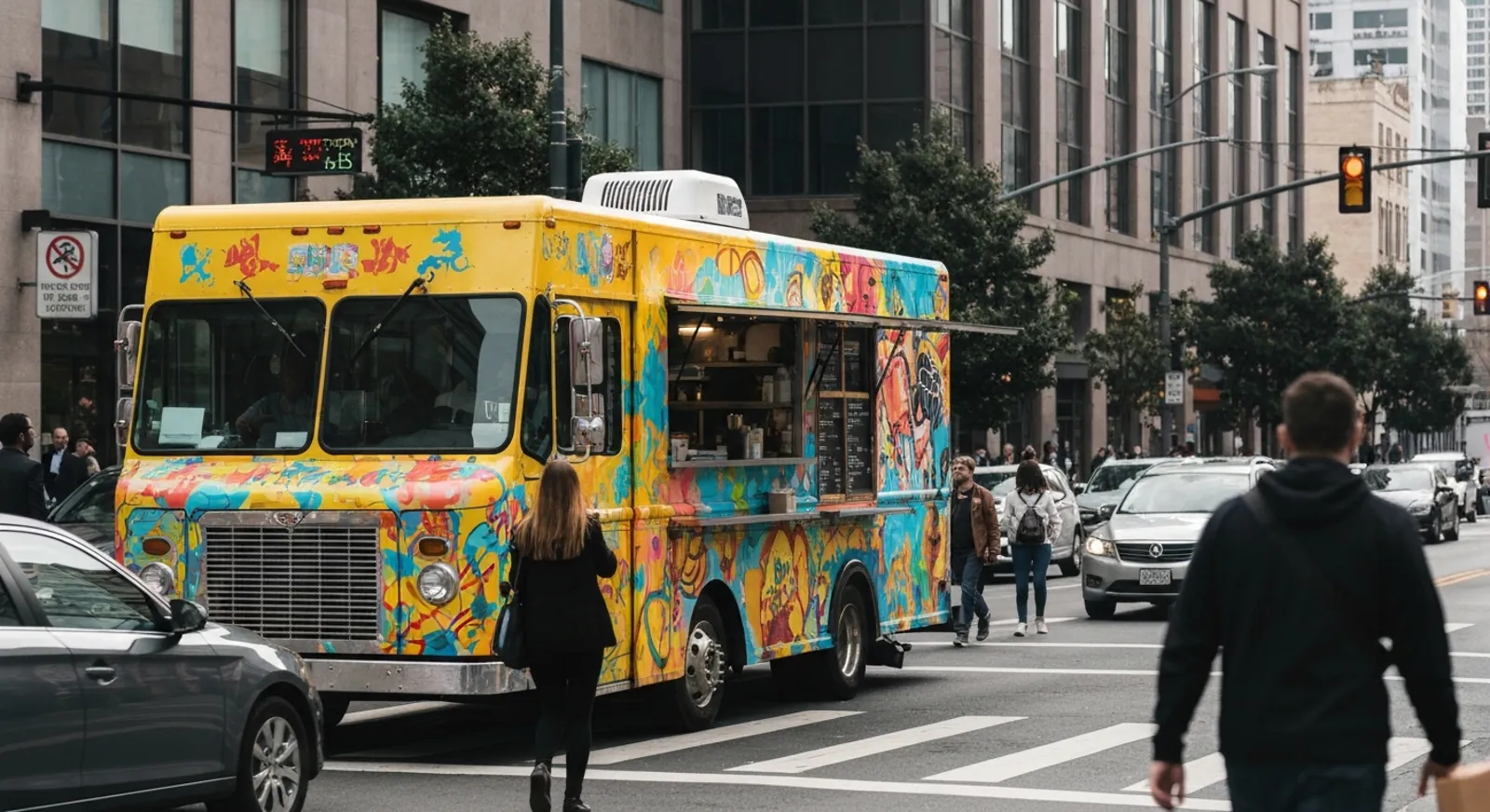
Los Angeles has 3,500+ food trucks — the largest market in the US. Permits run $1,000–$2,500/year. Commissary is required at $700–$1,500/month. Finance nationally — 1–3 day approval, from 7.5% APR. LA's film industry catering circuit is one of the highest-margin food truck revenue streams in the country.
Food Truck Financing in Los Angeles, CA (2026)
Key Facts — Los Angeles
- → Estimated active food trucks: 3,500+
- → Annual permit cost: $1,000–$2,500 (LA County) + city business tax
- → Monthly commissary: $700–$1,500
- → LA is where the modern American food truck movement started (Kogi BBQ, 2008).
- → Film/TV production catering pays $200–$500/person/day — highest margins in any food truck market.
Los Angeles Food Truck Market Overview
Los Angeles is the birthplace of the modern American food truck movement — Kogi BBQ's Korean-Mexican tacos in 2008 sparked a national trend that's still running. The LA market has depth and sophistication: customers are experienced, expectations are high, and competition is intense. But the sheer scale of the market — 10M+ people across the metro, year-round outdoor weather, and dozens of distinct neighborhoods with different demographics — means there's room for a well-differentiated concept.
The most important thing to understand about LA's food truck market: street vending is not your primary revenue channel. The most profitable trucks in LA run a hybrid model — a consistent private property or pod location for weekday lunch, plus events and private catering on weekends.
LA Food Truck Permit Requirements
LA County Department of Public Health issues the core operating permit. Los Angeles City (and other cities within the county like Santa Monica, Culver City, and Pasadena) add their own business licenses on top. The permitting landscape is complex — many operators use a permit consultant for their first application.
| Permit / Requirement | Cost | Notes |
|---|---|---|
| LA County Health Permit | $1,000–$2,500/yr | Based on truck size and equipment type |
| City business tax registration | $100–$600/yr | Based on gross receipts |
| Commissary agreement | $700–$1,500/mo | Required; LA has many licensed commissaries |
| Food handler certifications | $15–$50/person | All food handlers must be certified |
| Fire safety inspection | $150–$400 | LA Fire Department or county equivalent |
Best Locations for Food Trucks in Los Angeles
- Smorgasburg LA (ROW DTLA, Sundays) — Weekly outdoor food market drawing 5,000–8,000 visitors. Application process opens annually. One of the highest-quality vendor programs in LA.
- Culver City / Silicon Beach tech campuses — Google, Amazon Studios, TikTok, Snapchat. B2B catering $1,500–$4,000/day for regular circuit trucks.
- Abbot Kinney Boulevard, Venice — High foot traffic, premium demographics, private lot agreements required.
- Koreatown — Dense residential market, late-night foot traffic. Strong match for Korean, Asian fusion, and late-night comfort food concepts.
- Film/TV production lots (Burbank, Hollywood, Culver City) — Production catering circuit. Requires industry relationships and specific insurance.
Revenue Seasonality and the Film Industry Advantage
LA's year-round warm weather eliminates the seasonal dead zones that kill profitability in Chicago or Seattle. There's no winter slowdown — outdoor foot traffic remains consistent 12 months a year. This makes the LA revenue model more predictable than most US food truck markets.
The event calendar that drives peak revenue: Coachella (April) generates spillover demand in the Inland Empire and Palm Springs adjacent markets for trucks willing to travel. LA Pride (June) and Taste of LA-adjacent events drive strong weekend revenue in WeHo and Silver Lake. Rose Bowl Flea Market (monthly) is a consistent high-volume Sunday for vendors with a spot.
But the real differentiator in LA is film and TV production catering. Los Angeles produces more film and television content than anywhere in the world outside of Mumbai. Production companies regularly hire food trucks for on-set catering — craft services for crew, talent meals, and wrap parties. The economics are extraordinary: $200–$500 per person per day on a 50-person production means a single shoot day can generate $10,000–$25,000. The catch: you need industry contacts, the right insurance, and a truck that can reliably produce high volumes. Many experienced LA food truck operators describe landing a regular production contract as the moment their business became genuinely profitable.
Realistic gross revenue for an established LA food truck: $200,000–$400,000/year with a strong location strategy and a production catering client or two.
Best Food Truck Concepts for the LA Market
LA is the most sophisticated food truck market in the country. Customers have high standards and short attention spans. Novelty matters, but execution matters more.
Oversaturated: Korean-Mexican fusion (Kogi created the category — it's now everywhere), gourmet burgers, lobster rolls, and anything positioned as "Instagram-worthy" without substance. LA customers have seen every food trend and they can tell the difference between a concept and a gimmick.
Growing opportunities:
- Japanese breakfast / modern Japanese comfort food — Tamago sando, Japanese-style egg sandwiches, onigiri formats have exploded in NY and are underrepresented in LA trucks despite a massive Japanese-American population.
- Filipino cuisine — Adobo, sinigang, lechon — Filipino food is having a national cultural moment and LA's large Filipino community represents both a loyal customer base and authentic validation.
- Peruvian street food — LA's South American population is large. Quality Peruvian concepts (ceviche, anticuchos, lomo saltado) are almost entirely absent from the truck market.
- Modern vegan elevated comfort — LA's vegan population is the largest in the US. The opportunity isn't "vegan food" generically but vegan versions of specific beloved formats (Korean fried chicken, birria, smash burgers).
- Nigerian / West African — LA's African immigrant community is growing rapidly. Jollof rice, suya, egusi soup in truck format has no established competition and strong word-of-mouth potential.
Food Truck Financing Options for LA Operators
| Loan Type | Rate | Speed | Notes for LA |
|---|---|---|---|
| Equipment financing | 7.5%–18% | 1–3 days | LA trucks are expensive — larger loan amounts common |
| SBA 7(a) | 9.75%–10.25% | 30–90 days | Best for $100K+ purchases by established operators |
| Manufacturer financing | Promo 0–6% | 1–2 weeks | LA has several high-quality custom truck fabricators |
| Business line of credit | 8%–24% | 1–5 days | Useful for working capital alongside truck loan |
Monthly Budget for an LA Food Truck
| Monthly Cost | Estimate |
|---|---|
| Truck loan payment ($80K, 10%, 60 mo) | ~$1,700/mo |
| Commissary kitchen | $700–$1,500/mo |
| Insurance (auto + liability) | $400–$800/mo |
| Fuel (LA distances are significant) | $600–$1,400/mo |
| Location fees / private lot | $500–$1,200/mo |
| Total fixed costs (excl. food/labor) | ~$4,000–$6,600/mo |
LA's higher costs mean you need more revenue to break even. A realistic target: $6,000–$9,000/month gross to cover fixed costs before food and labor. Top-performing LA trucks doing events + corporate catering hit $15,000–$25,000/month gross consistently.
Finance Your Los Angeles Food Truck
Pre-qualify in minutes. No hard credit pull. Equipment loans and SBA options compared.
Check My Rate →Related Resources
- Food Truck Financing: Complete Guide
- Food Truck Startup Costs Breakdown
- Food Truck Loan Requirements
- California Commercial Vehicle Financing