Short Answer
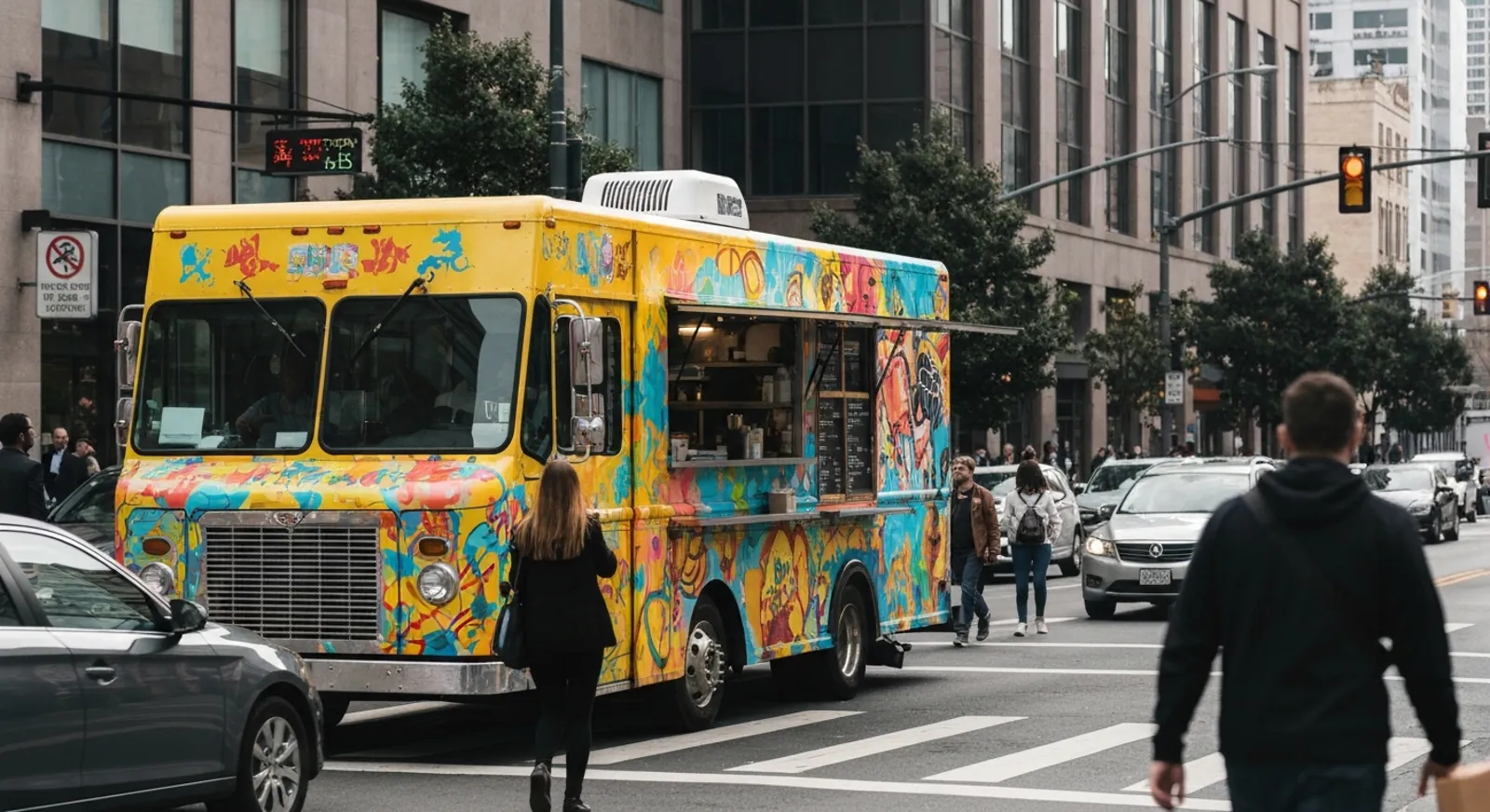
Nashville has 600+ food trucks serving one of the fastest-growing cities in the US. Permits run $600–$1,000/year. Commissary required at $450–$800/month. Finance nationally — 1–3 day approval, from 7.5% APR. Nashville's tourism economy and bachelorette party market create catering demand most cities don't have.
Food Truck Financing in Nashville, TN (2026)
Key Facts — Nashville
- → Estimated active food trucks: ~600
- → Annual permit cost: $600–$1,000
- → Monthly commissary: $450–$800
- → Nashville is the #1 bachelorette party destination in the US — a unique catering market.
- → CMA Fest (4 days in June) is the single highest-revenue event in the Nashville food truck calendar.
Nashville Food Truck Market Overview
Nashville's food truck market is defined by its tourism economy. The city receives 16 million+ visitors annually — a number that has nearly doubled in the past decade driven by the country music industry, a booming convention business, and Nashville's emergence as a top bachelorette and bachelor party destination. This creates unusual food truck demand: high-spending tourists who eat out for every meal, private event catering for parties and corporate groups, and a local residential market that skews young and food-forward.
Compared to Austin or LA, Nashville has moderate competition. The market is large enough to support new concepts, and local operators have generally not saturated the private catering space. The biggest challenge in Nashville is real estate — prime private lot locations near Broadway and Midtown are in demand, and building those relationships early matters.
Nashville Food Truck Permit Requirements
| Permit / Requirement | Cost | Notes |
|---|---|---|
| Metro Public Health — Mobile Food Unit permit | $600–$1,000/yr | Based on truck type; process takes 3–5 weeks |
| Davidson County business license | $50–$300/yr | Required for all businesses |
| Commissary agreement | $450–$800/mo | Required; several Nashville commissaries available |
| Food handler certification | $15–$50/person | ServSafe or equivalent |
| Fire marshal inspection | $100–$250 | Required before first service |
Best Locations for Food Trucks in Nashville
- Broadway / 2nd–4th Ave South (private lots) — Tourism epicenter. Private lot agreements $600–$1,200/month. Foot traffic is exceptional Thursday–Sunday year-round.
- The Nations neighborhood — Rapidly gentrifying West Nashville. Younger residential demographic, weekend foot traffic growing, lower competition than downtown.
- East Nashville (Gallatin Pike, Inglewood) — Established food-forward neighborhood. Strong local patronage, arts community, weekly markets.
- Vanderbilt / Belmont / MTSU corridors — University student market. Reliable lunch crowd Mon–Fri during academic year. Lower average ticket than downtown but consistent volume.
- Corporate corridors (Cool Springs, Brentwood) — Healthcare (HCA, Vanderbilt Health system), finance, and tech employers. B2B catering potential $1,200–$3,000/day.
Revenue Seasonality and Nashville's Unique Events
Nashville has a well-defined peak season running March through November, with December remaining active due to holiday tourism. January and February are the slowest months — but even the slow season benefits from convention business at Music City Center.
CMA Fest (June, 4 days, Nissan Stadium) is the single most important event in the Nashville food truck calendar. 80,000+ daily attendees and the surrounding neighborhoods generate enormous foot traffic. Well-positioned trucks report daily revenues of $5,000–$12,000 during CMA Fest — easily the equivalent of 10+ normal operating days. Apply for vending credentials through the CMA website; applications open in January for the following June.
Music Midtown is Atlanta's equivalent event, but Nashville has something most cities don't: the bachelorette party economy. Nashville is consistently ranked the #1 bachelorette destination in the US. Conservative estimates suggest 400,000+ bachelorette trips to Nashville annually. Party groups (typically 8–15 people) move through the Lower Broadway area in waves from Thursday evening through Sunday — high-spending, impulse-buying, and often looking for Instagram-worthy food experiences. Evening and late-night service near the entertainment district captures this market directly.
Private event catering — weddings in the Nashville suburb wedding venue corridor (Spring Hill, Franklin, Nolensville) — is another strong channel. A single wedding catering contract ($2,500–$6,000 per event) can be equivalent to several days of street service.
Best Food Truck Concepts for Nashville
Nashville's food identity is dominated by country music and Southern comfort food — which simultaneously creates consumer expectations and competitive pressure. The smart play is to find the gap between what Nashville's tourists expect and what the local residential market actually wants.
Oversaturated: Hot chicken is Nashville's signature dish — every visitor wants to try it. But there are dozens of hot chicken trucks and restaurants. Unless your execution is exceptional, hot chicken is a crowded lane. Traditional Southern BBQ has the same issue.
Underserved and growing:
- Mediterranean / shawarma / Middle Eastern — Nashville's growing international population and the country's broader Mediterranean food moment create strong demand. Quality shawarma, falafel, and levantine street food in truck format is almost nonexistent in Nashville despite obvious demand.
- Modern Mexican beyond tacos — Birria, elotes, aguachile, and Oaxacan-influenced formats are growing nationally. Nashville's Mexican population is significant and largely unserved by the truck market in authentic formats.
- Craft breakfast / brunch — Nashville's weekend brunch scene is massive (restaurant waits of 60–90 minutes are common). A truck serving quality breakfast sandwiches, egg dishes, or brunch formats in the Broadway or East Nashville area captures overflow demand at zero wait time.
- Plant-based comfort — Nashville's residential population skews younger and more progressive than the tourism demographic. Vegan Southern comfort (plant-based hot "chicken," BBQ jackfruit) serves both populations — locals looking for options and curious tourists.
The tourism-driven market also rewards novelty more than most cities. Visitors who won't be back for months are more willing to try something unfamiliar — a competitive advantage for new concepts that haven't yet built a local following.
Food Truck Financing Options for Nashville Operators
| Loan Type | Rate | Speed | Best For |
|---|---|---|---|
| Equipment financing | 7.5%–18% | 1–3 days | Most Nashville operators |
| SBA 7(a) | 9.75%–10.25% | 30–90 days | Established operators, best rate |
| Business line of credit | 8%–24% | 1–5 days | Working capital + seasonal cash flow |
| Personal loan | 8%–36% | 1–3 days | Startups with no business history |
Monthly Budget for a Nashville Food Truck
| Monthly Cost | Estimate |
|---|---|
| Truck loan payment ($55K, 10%, 60 mo) | ~$1,168/mo |
| Commissary kitchen | $450–$800/mo |
| Insurance (auto + liability) | $280–$550/mo |
| Fuel | $350–$700/mo |
| Location fee (if applicable) | $400–$900/mo |
| Total fixed costs (excl. food/labor) | ~$2,700–$4,100/mo |
Finance Your Nashville Food Truck
Pre-qualify in minutes. No hard credit pull. Equipment loans and SBA options compared.
Check My Rate →Related Resources
- Food Truck Financing: Complete Guide
- Food Truck Startup Costs Breakdown
- Food Truck Loan Requirements
- Tennessee Commercial Vehicle Financing