Short Answer
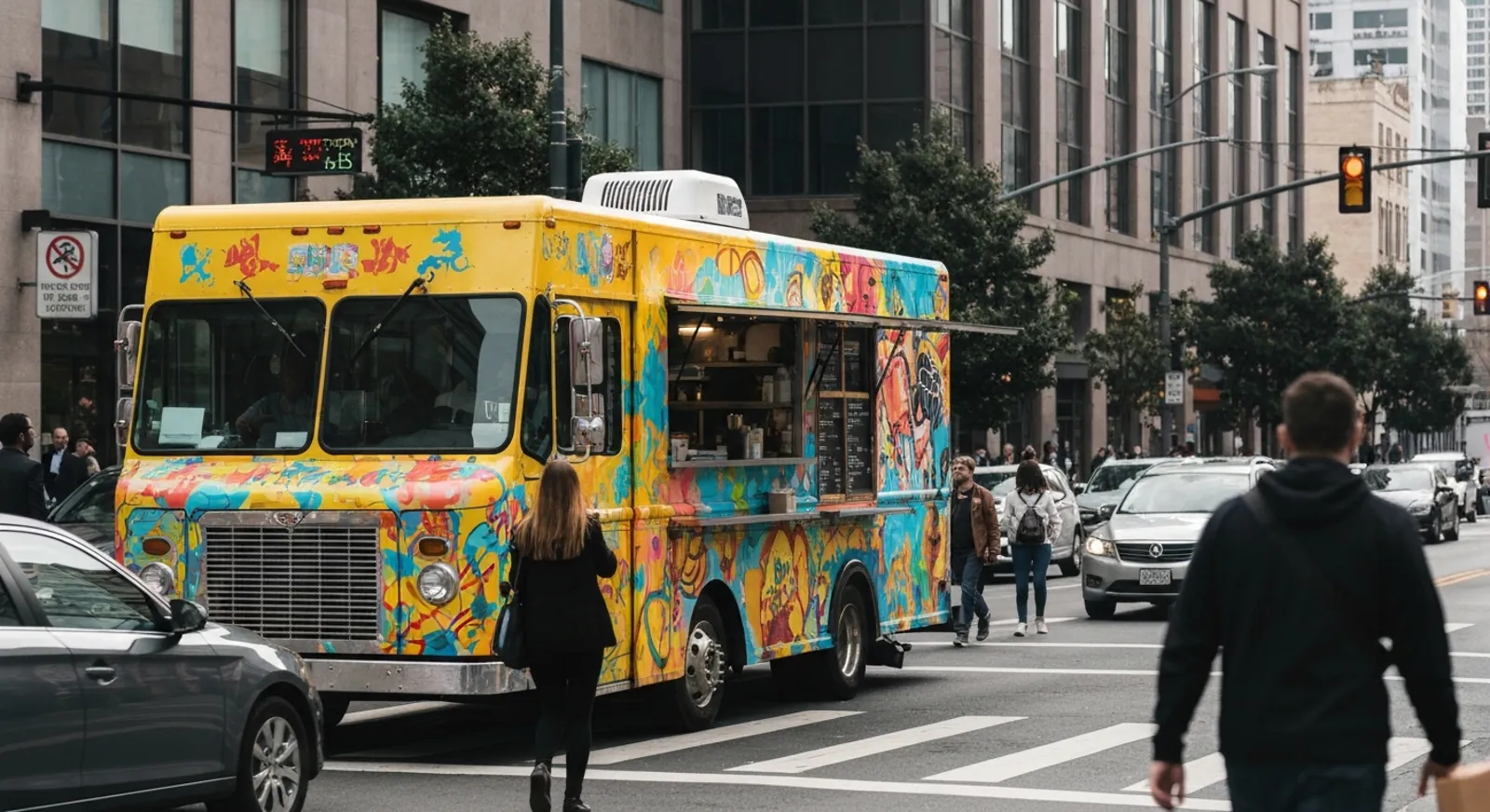
Seattle has 450+ food trucks serving one of the highest-income tech workforces in the country. Permits run $800–$1,500/year. Commissary required at $600–$1,100/month. Note Seattle's $19.97/hr minimum wage — the highest in the US. Finance nationally — 1–3 day approval, from 7.5% APR. Amazon and Microsoft campus contracts are the most valuable food truck accounts in the city.
Food Truck Financing in Seattle, WA (2026)
Key Facts — Seattle
- → Estimated active food trucks: ~450
- → Annual permit cost: $800–$1,500
- → Monthly commissary: $600–$1,100
- → Seattle minimum wage: $19.97/hr (2026) — highest in the US, affects labor cost significantly.
- → Amazon and Microsoft campus catering contracts are the most valuable food truck accounts in the Seattle market.
Seattle Food Truck Market Overview
Seattle's food truck market is defined by one central fact: it serves the highest-compensated workforce of any major US city outside San Francisco. Amazon, Microsoft, Boeing, Tableau, Expedia, Nordstrom, and hundreds of tech startups and scale-ups employ hundreds of thousands of workers with median tech salaries of $150,000+. These customers spend freely on quality food, have high standards, and eat out frequently.
The trade-offs are real: Seattle's minimum wage ($19.97/hr in 2026) is the highest in the country, which means labor costs are significantly higher than in Houston or Nashville. And the rain season (October through April) limits outdoor foot traffic severely. The model that works in Seattle is corporate-first — building stable, high-revenue tech campus accounts that provide predictable income regardless of weather.
Seattle Food Truck Permit Requirements
| Permit / Requirement | Cost | Notes |
|---|---|---|
| King County Public Health — Mobile Food permit | $800–$1,500/yr | Based on truck type and equipment |
| City of Seattle business license | $100–$400/yr | Based on gross receipts |
| Commissary agreement | $600–$1,100/mo | Required; Seattle commissaries concentrated in SoDo and Georgetown |
| Food manager certification | $15–$50/person | Washington State Food Worker Card |
| Fire safety inspection | $150–$400 | Seattle Fire Dept or King County depending on location |
Best Locations for Food Trucks in Seattle
- South Lake Union (Amazon HQ neighborhood) — Amazon's campus has 50,000+ employees in SLU. The surrounding blocks (Westlake Ave, Dexter Ave) are the highest-value lunch locations in Seattle. Private lot agreements and the Amazon vendor program are the paths in.
- Bellevue / Redmond tech corridor (Eastside) — Microsoft HQ in Redmond, plus Tableau, Expedia, and hundreds of smaller tech companies in the Eastside corridor. The Eastside is often overlooked by Seattle-focused trucks but has comparable or higher B2B revenue potential.
- Capitol Hill — Seattle's most vibrant neighborhood for food culture. Strong weekend foot traffic, evening service, and a customer base that actively seeks out new food concepts.
- Pioneer Square — Arts district adjacent to downtown. Mix of office workers, residents, and visitors. Growing food truck presence.
- Pike Place Market area — Tourist-heavy but also serves the nearby office market. Competition for spots is high; private property agreements in the surrounding blocks are more accessible than the Market itself.
Revenue Strategy: The Tech Campus Circuit and Rain Season Survival
Seattle's food truck economics are fundamentally shaped by two opposing forces: extraordinary B2B revenue potential from tech campuses, and the weather-driven collapse of outdoor foot traffic for 6+ months of the year.
The tech campus circuit is the defining revenue channel for Seattle's most successful food trucks. An Amazon or Microsoft campus lunch service can generate $2,000–$5,000 per service — because the average ticket is $18–$25 (compared to $8–$12 at most other markets) and the volume is consistent. The math is simple: a truck doing 3 tech campus lunches per week at $3,000 average generates $9,000/week, or roughly $430,000 annually in revenue before expenses. This is why the most competitive trucks in Seattle spend significant time and energy pursuing campus approvals rather than street locations.
Getting on campus vendor lists requires: liability insurance of $1M–$2M naming the company, food safety certification audits, completion of vendor applications, and often a tasting. The process takes 2–4 months. Start this process before your truck is operational.
Rain season strategy (October–April): Street foot traffic drops 40–60% during heavy rain. Operators who survive Seattle winters have built a revenue floor of corporate catering, private events, and indoor market appearances that doesn't depend on outdoor weather. The Seattle Convention Center hosts major conventions year-round — getting on the approved vendor list for overflow catering provides winter revenue that doesn't exist in warmer-weather markets.
Summer (June–September) is the peak outdoor season. Seattle Street Food Festival and Bite of Seattle are the signature food events, but the real summer opportunity is the outdoor event calendar: Seafair (August), Seattle Pride (June), and the numerous neighborhood festivals in Capitol Hill, Fremont, and Ballard.
Best Food Truck Concepts for Seattle
Seattle's customer base is progressive, sustainability-conscious, and genuinely adventurous about food. The tech workforce skews toward Asian food preferences — a significant portion of Amazon and Microsoft employees are South Asian, East Asian, or Southeast Asian, and they eat out frequently.
Oversaturated: Teriyaki is Seattle's signature cheap lunch (there are over 300 teriyaki restaurants in the metro — more per capita than anywhere in the US outside of Japan). You cannot compete on teriyaki. Poke bowls peaked and are now commoditized. Generic sushi burritos have similar issues.
Growing opportunities:
- Taiwanese street food — Scallion pancakes, lu rou fan (braised pork rice), oyster vermicelli, and beef noodle soup have almost no truck representation in Seattle despite a large Taiwanese-American community and broader market enthusiasm for the cuisine.
- East African (Somali, Ethiopian) — Seattle has one of the largest Somali communities in the US (centered in Tukwila and the Rainier Valley). Canjeero (injera), hilib ari (goat), and Somali tea culture are authentically represented in restaurants but rare in trucks. Ethiopian injera-based food has similar opportunity.
- Modern Korean beyond bulgogi — Seattle's Korean community is significant, and the broader market enthusiasm for Korean food is strong. Tteokbokki (spicy rice cakes), japchae, and Korean-style corn dogs in quality truck format are underrepresented.
- South Asian lunch formats — The tech campus circuit runs heavily through the Indian subcontinent diaspora. Quality biryani, daal, and Indian street food that matches restaurant quality for the tech workforce has exceptional B2B potential at Microsoft and Amazon campuses.
- Premium sustainability-focused concepts — Seattle customers respond to real sustainability commitments (composting, local sourcing, minimal packaging) in ways most other markets don't. A truck built around Pacific Northwest sourcing — local salmon, Dungeness crab, foraged mushrooms — has a differentiation story that resonates strongly with the Seattle market and has limited competition in the truck format.
Food Truck Financing Options for Seattle Operators
| Loan Type | Rate | Speed | Notes for Seattle |
|---|---|---|---|
| Equipment financing | 7.5%–18% | 1–3 days | Most Seattle operators |
| SBA 7(a) | 9.75%–10.25% | 30–90 days | Established operators; longer terms help with high fixed costs |
| Business line of credit | 8%–24% | 1–5 days | Essential for rain season cash flow management |
| Personal loan | 8%–36% | 1–3 days | Startups before tech campus contracts are established |
Monthly Budget for a Seattle Food Truck
| Monthly Cost | Estimate |
|---|---|
| Truck loan payment ($65K, 10%, 60 mo) | ~$1,381/mo |
| Commissary kitchen | $600–$1,100/mo |
| Insurance (auto + liability) | $350–$700/mo |
| Fuel | $400–$800/mo |
| Labor (2 staff at $19.97/hr, part-time) | $2,500–$5,000/mo |
| Total fixed costs (excl. food) | ~$5,200–$8,900/mo |
Seattle's high minimum wage makes it the most expensive US market to operate a food truck in terms of labor. A realistic break-even requires $8,000–$12,000/month in gross revenue before food costs — achievable for trucks that land tech campus contracts, but challenging for street-only operators in the rainy season.
Finance Your Seattle Food Truck
Pre-qualify in minutes. No hard credit pull. Equipment loans and SBA options compared.
Check My Rate →Related Resources
- Food Truck Financing: Complete Guide
- Food Truck Startup Costs Breakdown
- Food Truck Loan Requirements
- Washington Commercial Vehicle Financing